Friday, January 10, 2014

Enthusiasm: Possessed by God


Do you want people to hear what you say?  Write and 1024px-thumbnailspeak with enthusiasm.  Enthusiasm comes from the Greek, meaning inspired by God, motivated by God, possessed by God.  And how exactly do you get inspired?  For me the inspiration comes in two ways:  from spending time with God and from words I read or hear spoken or sung. 

Lately I have pursued a subject for which I had no enthusiasm.  A friend brought it up at dinner with no resolution between two sides.  And it’s not something I can satisfactorily resolve in a short essay.  But here’s the crux:  one friend believes most sincerely and literally in a six-day creation about 6000 years ago.  She believes this based on Genesis 1:1-2:4. She asked me to admit that Genesis is a book of history, which I did, hesitantly, in order to give a fuller explanation at a later time.

Sometimes answers are too complex and sometimes the questions asked are the wrong questions. 

History as we know it is a linear recitation of dates and events.  Then there is Genesis.  Few modern historians would call it a book of history.  It begins with a sort of prose poem or recitation containing repetitive phrases and introduced with words of beauty. 

In the beginning of God's preparing the heavens and the earth --  the earth hath existed waste and void, and darkness [is] on the face of the deep, and the Spirit of God fluttering on the face of the waters, and God saith, `Let light be;' and light is.  (Genesis 1:1-3, YLT)

The remainder of the book of Genesis contains cosmogony, genealogies, ancestor’s narratives, formal blessings and curses (destiny proclamations), conflict tales, 1 chapter of a battle account (chapter 14), and a narrative about the rise of a courtier to a position of power.  I have a problem calling it a history at all, unless you very loosely describe history as a group of writings about what happened in the past. History as a genre of writing did not exist until the Greeks.

What questions did the ancients ask? They believed that the sky was hard and held back water.  Why?  How else to explain it leaking rain drops?  Did the ancients ask the questions about the origin of the cosmos--a question  20 and 21st Century scientists strive to discover?  Did they act as scientists before science existed?  Or did they observe the light and give thanks that it lit the day for productive endeavors?  Did they use light and darkness and moon and stars to create a calendar—something useful?  (Yes, around 3500 B.C.)

The ancient Sumerians posited in their writings that the gods were the water and the earth.  The ancient Semitic peoples, the Jews, put one God at the forefront as producer and director of the cosmos.  And God called these Semitic people to Himself and made them the callers of the others.  But in neither case can 21st Century scientists use any of these writings in their investigation because the writings are not scientific and do not describe scientific processes.

Is the Bible therefore useless to science?  What do you think?  Science springs from observation, data collection, and organization, and positing theories until they are proved or dismissed.  The Bible speaks of God and his people and faith, which is the evidence of things that are not observed. 

And yet, science cannot be performed in a vacuum.  The Bible can be useful to scientists as they work with enthusiasm motivated by God exploring, investigating, and crediting God for the beauty of the discovery.  And the Bible answers the “why” questions while science answers the “how.”

So, whether you are a scientist, a manager, a chef, a warehouse worker, a painter, a mechanic, a poet, a data-entry operator, a firefighter, a doctor, or a teacher, do it all with the knowledge that God provides the beauty, the structure, and the function of your vocation.  Exercise your calling well, with grace, gratitude, and of course, enthusiasm.


Where do you find enthusiasm?


Monday, December 2, 2013

At War with Christmas?


I agreed to review The War on Christmas because I felt that it might get me into the Christmas spirit and motivate me to start the process of getting ready for Christmas: testing lights, planning a menu, issuing invitations, and baking extravagant desserts. From the title I thought it might be a good book for my international guests to help them learn something about the holiday we celebrate. It was neither. Instead what I received was a collection of quickly written, lightly edited, diatribes pitting Christians against the rest of society in (as the subtitle proclaims) Battles in Faith, Tradition, and Religious Expression. I have to ask: Whatever happened to Peace on Earth, Goodwill to men?

On page 41, I finally found the author/editor’s frame of reference: “Sadly, there are many people within the Church who accept the supposed millions of years, instead of the truth as given by Genesis. Because of this, they don’t have valid answers for people like my friend [who had asked why Christians did everything in their power to stay alive including organ transplants instead of welcoming death and heaven], but instead would ignore his questions and relate the story of the babe in the manger in the hope my friend would start believing this.”

Ignoring this tract’s poor writing, I am offended because the author believes that in order to communicate the gospel—the good news of Christmas—I must also believe in the author’s “young earth theory.”

Contrary to the author’s position, the Apostle Paul, in the book of Romans (specifically Chapters 5 and 6), clearly states that we were once under the reign of sin, allied with Adam the first man. But, once we give ourselves to Christ, we are under God’s reign in a kingdom of grace. Jesus was born to give us a life of freedom just as he himself lived freely in an occupied Israel. As long as we stay connected to him through the Spirit who gives us life, we are free to choose organ transplants or to reject them, to choose to be buried or cremated, to choose to worship together in many different forms and manners, to choose to eat meat or become vegan. We are free to live believing the earth to be thousands of years old or millions or billions of years old and to use the best scientific methods available to defend our beliefs. Indeed, Christians are free to celebrate Christmas or to ignore it entirely.

The book contains some good information. The author/editor explores the original meaning of words such as Christmas and holidays. They explain the meaning of the X in Xmas (from the first letter of the Greek word for Christ), but leave it up to the individual believer’s conscience whether to write Xmas or Christmas. Traditions such as manger scenes are explored and compared to scripture and the inn which had no room is debunked using archaeological exemplars.

The War on Christmas concludes with information about the author’s employer Answers in Genesis and its Creation Museum. I believe that this book was written as a gift shop item for that museum. If you are interested in researching the origins of Christmas, a plethora of information exists on the web. These books may also be helpful:

The Top 40 Traditions of Christmas: The Story Behind the Nativity, Candy Canes, Caroling, and All Things Christmas by David McLaughlin

The origins of Christmas by Joseph F. Kelly

Stories behind the great traditions of Christmas by Ace Collins

How will you celebrate Christmas? Will you discuss the Big Bang Theory or contemplate the earth’s origins? Will you declare war on our culture and its repression of the true story of Christmas? Why don’t you join me in celebrating the birth of Jesus and showing our culture what a little peace on earth looks like as we demonstrate God’s good will to all mankind. And this Christmas if your friends ask you why Christians do this or that or some other thing, take the opportunity to tell them about the time when God broke into history and gave us a vision for what it meant to live in His kingdom, a kingdom where when we follow Jesus completely and live more freely than ever before because his yoke is easy and his burden is light.

I received this book free from the publisher and was not required to give it a favorable review.

Thursday, September 19, 2013

We Are Failures

We do fail. Over and over again. Some people think that we should never think of ourselves as failures.  But God is the God of failure (and possibility)–just look at who he chose to be his Judges, Kings, and Prophets.  Read through the book of Judges and see if you can find more than one or two who were not failures.Route_66_car_petrified_forest (1)

Yet, can and must benefit from failure.  We must learn from them, accept their consequences, and present them to God along with our successes.  It’s the only way to truly move on. My formerly income producing business is winding down–does that mean I’m a failure. Maybe. But it also encourages me to consider new avenues, perhaps retirement or new ways of marketing.

I’ve never forgotten the story my undergrad professor told about the buggy whip manufacturers who went out of business when the automobile arrived. Except for one. That one observed his whips and took a long look at the automobiles. He let his mind work and soon came up with a new description for his old manufacturing business: Flexible cables. And that’s what we need to do to succeed. Reframe our position in the light of present circumstances and see where that takes us.  Where has a failure caused you to change course, change description, or change a job?  Has it caused you to make some other change?

Photo By Finetooth (Own work) [CC-BY-SA-3.0 (http://creativecommons.org/licenses/by-sa/3.0) or GFDL (http://www.gnu.org/copyleft/fdl.html)], via Wikimedia Commons

Tuesday, April 23, 2013

Stress: The Bane of Life

Stress.  It happens to me when my dream’s delayed. Michelangelo_Buonarroti_010 My husband sees it and says I’m eating myself.  My fingernails are so short they can go no further, the side of my lip has a wound on it.  When eating  I overbite into my lower lip and there’s a sore on my elbow where I picked off some dry skin.  Yes, stress can eat us up and destroys us from the outside while it works on us from the inside.

The remedy?  For me, it’s continuing my daily activities, but taking rest breaks to garden, hike, and read.  Gardening connects me with God’s provision as the earth shoots forth new life in its time and each insect, plant, bird, and animal contributes.  Hiking works similarly but takes me out of my area into a place where I am the stranger.  There, in the woods, my only job is to watch and listen.  And as I do, God reminds me that He is great and I am small and that all will be well in His timing. 

And finally, I read (or watch a good movie or TV show).  Reading takes me away for awhile to a place where problems are solved or wrestled with, to a place of hope.  For in truth it is hopelessness that leads to my stress.  Once I see the way ahead, I relax.  What am I reading?  I’m finishing these two books which you wouldn’t think would be related, but they are: 

God of Liberty: A Religious History of the American Revolution

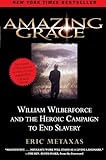
Amazing Grace: William Wilberforce and the Heroic Campaign to End Slavery

Also on my reading pile: 

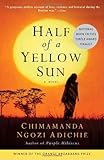
Half of a Yellow Sun

And to contrast it:

Snow Day: A Novel
Slow Way Home

What do you do to relieve stress?


Picture by Michelangelo Buonarroti [Public domain], via Wikimedia Commons

Wednesday, April 3, 2013

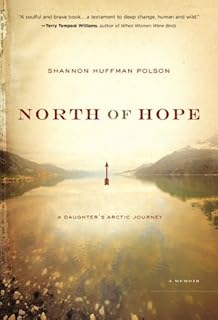
North of Hope: A Review


I rarely read memoirs, and requested this book by mistake because I thought it was fiction. What else could it be when a couple is mauled and killed by a grizzly bear? That just doesn’t happen in real life. To my chagrin, the book that arrived was a memoir, North of Hope by Shannon Huffman Polson, the daughter of one of the people killed by the grizzly. I opened the pages, not quite knowing what to expect, and was greeted by two old friends: Ralph Waldo Emerson and Christian Wiman. “This has promise,” I told myself and waded in, identifying almost immediately with Shannon’s need to know answers—under the premise that sufficient knowledge will turn back the clock. But as she discovered, there really are no answers that satisfy.

I followed Shannon through the funeral, cleaning out the house, and resuming her own life, hoping for a point of connection; I recently buried my mother. But the numbness of death continued through the reading of this well-crafted memoir, and despite its heavy subject, I could not get past the craft to probe the depths. Here’s a look at the funeral:

A few days later, one of Dad’s colleagues shook his head and looked into the distance. “It’s hard to believe,” he said. “I saw him every day of the work week and some weekends for twenty-five year. I can’t believe he’s gone.” I felt a twinge of jealousy. He’d spent more time with my dad than I had. . .

The cemetery in Healy sits on a hill framed by mountains of the Alaska Range. Dad and Kathy’s friend Shorty, who lived nearby, said that he walked his dogs there every day. It was the place with the best view of the northern lights when they danced in fall and winter night skies. The tundra was decorated with early fireweed and lupine, a fence of spruce trees. Shorty had dug a perfectly square grave facing east to hold both coffins and hauled away most of the fill. . . Dad’s army friend George and his wife, Joanne, stood off to the side next to a lone pine tree, as though unable to step any closer to that hole, as though standing next to the tree might protect them somehow.

Father Jack performed the service for our small group standing on the Alaskan tundra. The mountains stood witness, watching familiar scenes of death and grief that played like shadows on their slopes each day.

I stood at the corner of the chasm closest to Dad’s coffin. My breath came shallowly, a susurrus leaking oxygen to thick reluctant blood. I knelt. I kissed the hard, cold surface of the coffin. The week caught up with me like a rifle shot. I touched the coffin with faltering fingers. Again. And again. The dark, gaping hole. The cold boxes. My legs gave way. Pages 113-114.

Shannon, an avid adventurer, decides to retrace her father’s path and raft along the same wild Alaskan river.

It was a sacred journey. A pilgrimage. But surely it was not only about a river. The river flowed by, running, always running. I wanted it to stop. I wanted it to flow in reverse. I wanted there to be a dam in the river somewhere far back in the mountains, a lake to catch the water and keep it safe for swimming, for drinking, for watching sunlight dancing on the surface of still waters. But the water flowed mercilessly north. There was healing in the tyranny, and tyranny in the healing. North of Hope, p. 124-125.

On her journey she begins to realize something about herself and some things about life.

“This, it now seems to me, is a difference between people of the land, and people on the land, between humility and hubris. It is why a part of our Western culture looks with envy at indigenous people’s beliefs: they come from a deeper wisdom of themselves and their world than we can hope to reclaim. We envy this, while ignoring the potential of this wisdom in the name of supposed progress, even as such progress continues to erode that wisdom or the possibility of our ever recovering it.” p. 169.

I would not spend too much time pondering these words. It is a mistake to believe that indigenous people (whoever they might be) have cornered the market on wisdom. The Bible speaks often about wisdom because God is the Father of Wisdom. We can stop worrying about losing the wisdom of indigenous people when God’s wisdom is available to any who seek Him.

Shannon did come to realize the limitations of her trip, indeed the limitations of life. “This trip won’t make it okay. It’s never going to be okay. . . . It’s not supposed to be okay. “ p. 178. She realizes this on the river and when she visits her dying grandmother. “I understood why it is said that hearts break. I’d understood for a while now. Underground rivers of sadness scald like fire. And so I felt that ripping and burning of a soul and a heart, breaking in relief at talking to her, breaking in seeing her face and holding her hand, breaking as I felt Dad and Kathy’s absence and knowing they would want to be there too, breaking because I was losing her and I didn’t know how much more loss I could bear.” p. 185

This memoir moved in and out of Mozart’s Requiem and gave me glimpses into the life of grizzly bears and the untamed beauty of the Alaskan wilderness. It was eminently readable. I had hoped that it would give me insight into grief, but it didn’t, perhaps because the author, herself, has no insight to share. This memoir left me as cold as the frigid water of that Alaskan river, and although the author continually tossed me crumbs she was unable to satiate me. But maybe that’s her point. There are no satisfactory answers to life’s most devastating losses.

I received this book free through a book review program. I was not required to write a positive review. The opinions I have expressed are my own. I am disclosing this in accordance with the Federal Trade Commission’s 16 CFR, Part 255.